
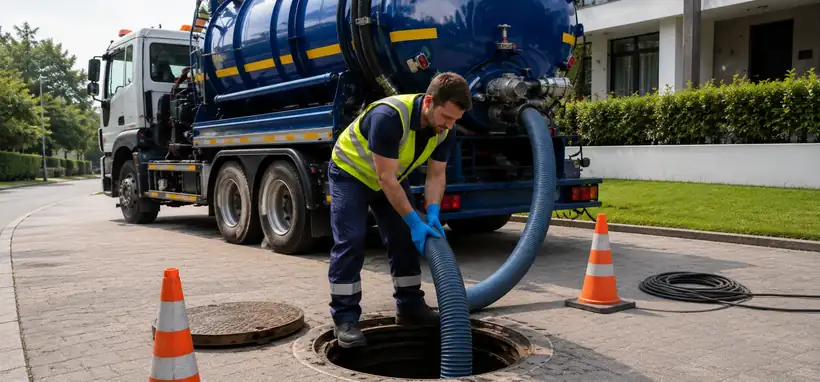
A tower is a drainage machine with people living in it. Dozens of apartments feed each vertical stack, everything meets in horizontal collectors, and the whole system exits through a handful of lines you rarely think about until one of them stops. This guide is the tower drainage picture from the manager side: where it fails, what a program covers, and what to keep on file.
How tower drainage fails
Almost every tower drainage crisis is one of four stories. A stack blockage backs up a whole column of units, starting from the lowest. Grease from F&B tenants or resident kitchens hardens in shared lines that were never generous. Scale quietly narrows pipes in buildings past their first decade, so the same lines block again and again. And basement drainage, the sumps and drains at the lowest level, fails silently until the first heavy rain finds it.
Reactive is the expensive option
A reactive building pays three times: the emergency call out itself, the resident complaints and damage that come with a backup, and the repeated visits to lines whose real problem is never fixed. A programmed building pays once, on a schedule it chose, at times that suit the building. The economics are not subtle; the difficulty is only that drainage is invisible while it works.
What a sensible program covers
- Scheduled jetting of stacks and horizontal collectors, prioritising known problem lines
- Descaling where camera evidence shows narrowed pipes, once, instead of endless clearing
- Basement drains, sump pits and pump checks before the rain season
- Grease lines and traps for any F&B tenants, on their own faster cycle
- A camera survey baseline, so decisions are based on the pipe, not guesswork
- Priority emergency response, because programs do not eliminate surprises, they just make them rare
The records that protect you
Every service visit should leave paper: what was done, on which lines, what was found, and what is recommended. Those records do three jobs. They satisfy audits and owner questions about where the service charge goes. They settle unit versus building responsibility disputes with evidence instead of argument. And they turn the next manager handover from folklore into a file.
Where to start if you have nothing
Start with a camera survey of the main stacks and collectors and the basement drainage. That single visit tells you which lines are healthy, which are narrowed, and which need attention now, and it converts the first year of the program from guesswork into a priority list. From there, most towers settle into a rhythm: main lines annually, problem lines and grease more often, basements before the rain.
- Tower drainage fails four ways: stack blockages, grease, scale, and silent basement problems.
- Reactive buildings pay three times per incident; programmed buildings pay once, on their own schedule.
- A program covers stacks, descaling where proven, basements before rain, grease on a faster cycle, and priority response.
- Keep records of every visit: they satisfy audits, settle responsibility disputes, and survive manager handovers.
Want a drainage program for your building?
Free quote before we start. Same day service across Dubai.
Frequently asked questions
How often should a tower have its drainage jetted?
Most towers settle on main stacks and collectors annually, known problem lines and grease more frequently, and basement drainage checked before each rain season. A camera baseline lets the schedule follow the actual pipe condition rather than a generic calendar.
A lower floor unit keeps backing up. Is that their problem or ours?
Location decides it. If the blockage sits in the unit pipework it is theirs; if it is the shared stack, the symptom simply appears at the lowest connected unit and it is a building matter. A camera check locates it, and the footage settles the conversation.
Is descaling worth it for an older tower?
Where the camera shows lines narrowed by scale, yes. Descaling restores the full bore once, which typically ends the pattern of the same lines blocking repeatedly, and it is far cheaper over a few years than the emergency visits it replaces.