
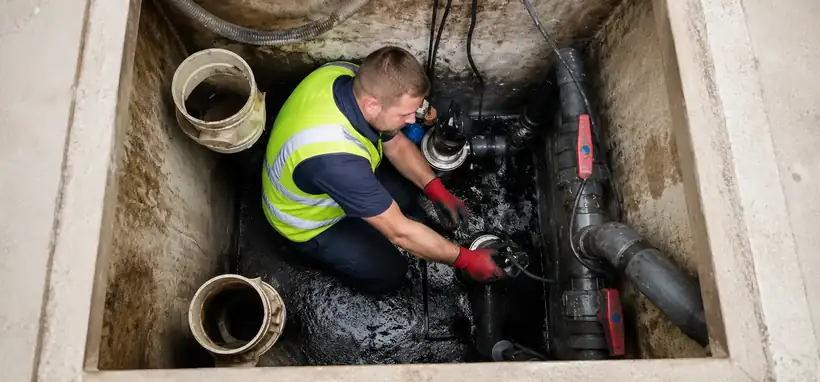
Most restaurant drainage advice begins and ends with the grease trap. The trap matters, but it is one component in a system that includes every sink line, the floor drains and channels, the pipework connecting them, and the schedule and records that keep it all invisible during service. This is the whole system view, from the owner chair.
How kitchen drainage actually fails
The pattern is nearly universal. Fats, oils and grease leave the pans hot and liquid, cool inside the pipes, and harden layer by layer. Floor drains collect food solids and mop water all day. The trap fills until it stops separating. Each part degrades quietly, and then one Friday night during peak service the floor drain backs up, which is the most expensive possible time to learn your drainage was overdue.
The whole system, listed
- Sink and prep lines, the grease highways, coating from the inside daily
- Floor drains and channels, catching solids, holding the water seal that blocks smells
- The grease trap, working only while it has capacity to separate
- The kitchen main and connections, where everything meets and shared problems begin
- The schedule and the records, the parts that make the rest reliable
What a program looks like
A working kitchen program is boring by design. Lines are jetted on a cycle before they narrow, not after they block. The trap is emptied and cleaned on its own faster rhythm, sized to how hard your kitchen works. Floor drains and channels are cleared so seals hold and smells stay away. Everything is scheduled outside service hours, and every visit leaves a record. The busy kitchen cycle is often monthly for the trap and quarterly for the lines; the right numbers come from looking at your kitchen, not from a generic rule.
The records inspections expect
Dubai Municipality expects kitchens to maintain their grease management, and inspectors ask for evidence, not intentions. Keep the service log: dates, what was serviced, who did it, and where the waste went. A kitchen that can hand over a tidy file has a very different inspection from one that answers from memory, and the same file is what protects you in any dispute with the building over shared line problems.
Habits that stretch the intervals
The program carries the load, but daily habits change the numbers. Dry wipe pans before washing, keep strainers in every sink, never pour fryer oil to drain, and brief every new hire on all three. Kitchens that hold these habits genuinely extend their service intervals; kitchens that do not pay for the difference in extra visits and occasional Friday emergencies.
- Kitchen drainage is a system: sink lines, floor drains, the trap, the main, and the schedule that maintains them.
- Grease hardens in lines daily; the trap only works while it has capacity; failures pick peak service to appear.
- A program jets lines before they narrow, cleans the trap on a faster cycle, and works outside service hours.
- Keep the service log: inspectors ask for evidence, and the same file protects you in building disputes.
Want your kitchen drainage on a program?
Free quote before we start. Same day service across Dubai.
Frequently asked questions
Is the grease trap enough on its own?
No. The trap protects the drainage downstream of it, but the sink lines upstream coat with grease regardless, and floor drains fail independently. A trap only program still ends with blocked lines; the trap and the lines need their own cycles.
How disruptive is a kitchen drainage visit?
Minimal when planned. We schedule outside service hours, work efficiently, and leave the kitchen running before prep begins. The genuinely disruptive event is the unplanned one, a backup during service, which the program exists to prevent.
What records should I actually keep?
A simple service log per visit: date, what was serviced, the company, findings, and waste disposal. Keep it where a manager can produce it during an inspection. We provide documentation with every visit precisely so this file builds itself.