
Sewage coming up a drain instead of going down it is alarming, but the first half hour is simpler than it feels. The goals are only these: stop adding water, keep people away from it, and get the right information to the team who will fix it.
First: stop the water
The backup rises because water keeps entering a line that has nowhere to send it. Stop using everything that drains: taps, showers, washing machines, dishwashers, and above all toilets. In an apartment, remember that the line may be shared, so the water pushing up your floor drain may not even be yours; either way, adding more makes it worse.
Second: protect people and property
Keep children and pets away from the affected area; sewage water is a health hazard, not just a mess. Move rugs, furniture and anything absorbent out of reach of the water. If the backup is near electrical sockets or appliances, switch off power to that area before it spreads. Open windows for ventilation.
Third: gather what the team needs
While you wait, note three things: which fixtures backed up, whether it happened during or right after using something specific, and whether neighbours are affected. In a building, tell the watchman or management immediately, because a shared stack backup needs building level access. This information turns the first minutes of the visit into diagnosis instead of discovery.
What not to do
- Do not keep flushing to see if it clears; every flush adds to the flood
- Do not pour chemicals into a backed up drain; they sit in the standing water and become a hazard for whoever works on it
- Do not open the manhole and attempt to rod it yourself; without the right equipment this usually pushes the blockage deeper
- Do not start deep cleaning before the cause is fixed; it will simply back up again
What happens when we arrive
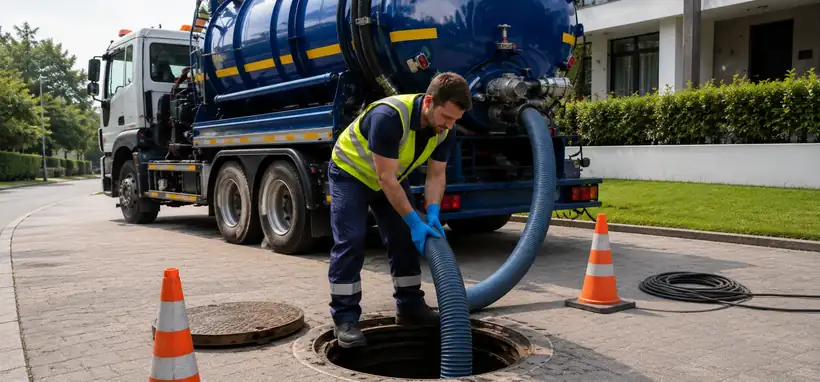
The team locates the blockage, usually from the nearest manhole or access point, clears the line, and confirms flow before any cleanup begins. For recurring backups, a camera check finds the underlying cause so this is the last time, not the latest time.
- Stop all water use immediately; every flush and every tap adds to the backup.
- Keep people and pets away, move absorbent items, and cut power near the water if needed.
- Note which fixtures backed up, what triggered it, and whether neighbours are affected; tell building management fast.
- Do not flush repeatedly, pour chemicals, or rod the manhole yourself.
Dealing with a backup right now?
Free quote before we start. Same day service across Dubai.
Frequently asked questions
Is sewage backup dangerous?
Yes, treat it as a health hazard. Keep children and pets away, avoid contact, wash thoroughly after any accidental contact, and disinfect affected surfaces once the cause is fixed and the area is cleared.
Whose responsibility is a backup in an apartment?
It depends where the blockage sits. If it is within your unit pipework it is typically yours; if it is the shared stack or building main, it is a building matter. Locating the blockage answers the question, which is one reason to involve management early.
How fast can you respond to a backup?
Our line runs 24/7 and backups are treated as emergencies. Call with your location and what backed up, and we will get the nearest team moving and tell you honestly how soon we can arrive.