
In the established villa communities of Dubai, the gardens planted twenty years ago are now the prime suspect in most recurring drain blockages. Roots and drains are natural partners: the pipe carries water, the root wants water, and any joint or defect is an open door. Here is how the story goes and how to end it.
How roots get in
Roots do not smash through sound pipe. They follow moisture to a joint that has shifted, a seal that has aged, or a hairline defect, and send in fine feeder roots that thicken over time. Once inside, they grow into a mass that works like a net across the flow, catching paper, grease and debris until the line blocks. The intrusion point is usually small; the blockage it enables is not.
The signs that give roots away
- The same line blocking again and again, on a roughly regular cycle
- Blockages that clear easily but never stay cleared
- A villa with mature trees near the likely pipe route
- Gurgling and slow drainage that worsens gradually between blockages
- Backups appearing at the villa manhole rather than at one fixture
The signature is the repetition. A one off blockage is usually debris; a subscription to blockages is usually roots or heavy scale, and a camera survey shows which within the hour.
How removal works
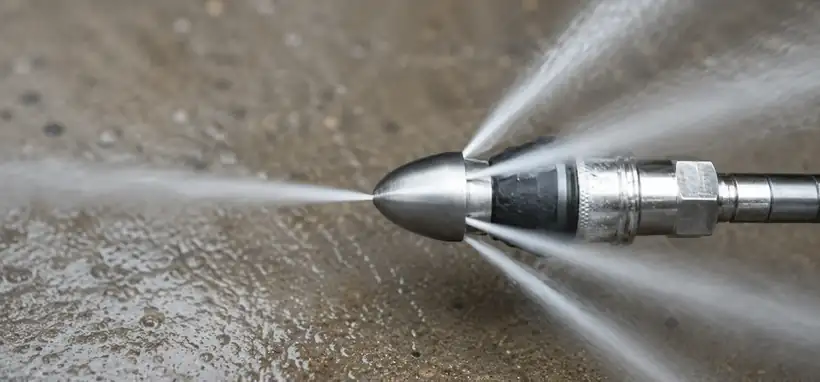
Root cutting uses jetting nozzles designed for the job, driven by high pressure water, to cut the root mass out of the pipe from the inside and flush it away. No digging, no garden damage, and flow returns immediately. The survey that follows matters as much as the cutting: it confirms the line is clear and, critically, shows the exact point where the roots entered.
The decision that ends the cycle
Cutting solves today; the entry point decides the future. Roots return through the same door unless it is closed, so after clearing you have two honest options. One is scheduled maintenance: cut the regrowth on a planned cycle, sensible where the intrusion is minor and the tree is valued. The other is repairing the joint or section where the roots enter, a one time fix that ends the pattern. The camera footage shows which option fits, and a straight recommendation should come with it.
Prevention for new planting
If you are landscaping now, keep large thirsty species away from the drainage route, favour smaller root systems near pipe runs, and keep a copy of your drainage layout so future planting decisions are informed ones. The cheapest root removal is the one the garden design made unnecessary.
- Roots enter through joints and defects, then grow into a net that catches everything passing.
- The signature is repetition: the same line blocking on a cycle, clearing easily, never staying clear.
- Root cutting removes the mass from inside the pipe with no digging, and flow returns immediately.
- The entry point decides the future: cut on a schedule, or repair the joint once and end the cycle.
Same drain blocking again and again?
Free quote before we start. Same day service across Dubai.
Frequently asked questions
Will the roots damage the pipe if I leave them?
They tend to make things worse over time. The mass grows, catches more debris, and the widening intrusion can displace the joint further. Left long enough, a clearable problem can become a repair. Early cutting plus a look at the entry point is the cheap version of this story.
Do I have to remove the tree?
Rarely. The problem is the open joint, not the tree as such. Cutting clears the line, and repairing the entry point closes the door while the tree stays. Removing a mature tree is usually the last resort, not the first.
How fast do roots grow back after cutting?
It varies with the species, the season and the size of the opening, from many months to a couple of years. That is why the post cutting camera check matters: seeing the entry point lets you choose between a maintenance cycle and a one time repair with real information.